Authors:Florence Onyango, Maria Nalantei
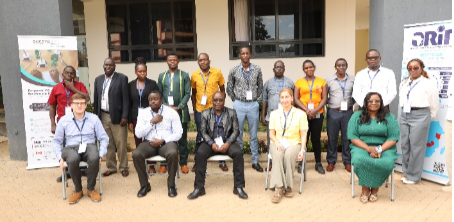
The Africa Research and Impact Network (ARIN), through its Locally Led Adaptation Metrics for Africa (LAMA) project, hosted a side event during the Africa Climate Summit 2 in Addis Ababa, Ethiopia. The event, held on September 8, 2025, brought together policymakers, researchers, and youth leaders to discuss how locally led adaptation (LLA) indicators can improve access to climate finance and strengthen the continent’s climate resilience.
In his keynote, Prof. Cromwell Lukorito, Vice Chair of the IPCC Working Group II, emphasized that metrics co-produced by local communities are a vital scientific input for the IPCC’s Seventh Assessment Report. He stressed that these indicators are essential for shaping global climate adaptation science and policy. He also highlighted the importance of moving beyond traditional top-down frameworks to ensure that adaptation finance directly benefits vulnerable communities.
Mr. Hamza Abdiwahab, Director of Policy, Planning, and Performance at the Ministry of Youth and Sport, Federal Government of Somalia, underscored the need to harmonize climate and sectoral policies to better reflect youth contributions. He highlighted the importance of empowering young people to lead public–private partnerships that scale up youth-friendly LLA actions and initiatives.
Case presentations from various organizations showcased a range of approaches to adaptation finance across Africa. ARIN shared lessons from its LAMA project in Kenya and Benin, highlighting the value of local metrics. The Climate and Development Knowledge Network (CDKN) presented on subnational climate finance policy frameworks in Kenya and Ethiopia. Clean Tech Hub Nigeria showcased the shift from large-scale projects to community-driven climate action. The Ministry of Environment and Climate Change, Somalia, demonstrated how youth-led initiatives are being integrated into national policies like the National Adaptation Plan (NAP).
Participants in a panel session identified persistent data gaps and the absence of consolidated, community-led frameworks. They called for a dedicated platform to consolidate indicators, promote peer learning, and ensure that progress on adaptation is measurable and actionable. Discussions highlighted the need for metrics that capture decentralized decision-making, technology adoption, and financing aligned with local priorities. Regional blocs were also urged to harmonize policies to deliver scalable solutions.
The event concluded with strong recommendations to integrate LLA indicators into national systems and align Africa’s efforts with the Global Goal on Adaptation and the IPCC’s Seventh Assessment Cycle. Speakers also highlighted East Africa’s heightened vulnerability to climate impacts despite its low emissions, advocating for investments in indigenous, homegrown solutions over continued aid dependency.