By: Maria Nailantei & Florence Onyango
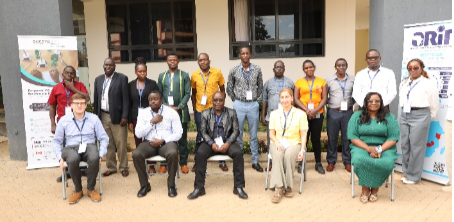
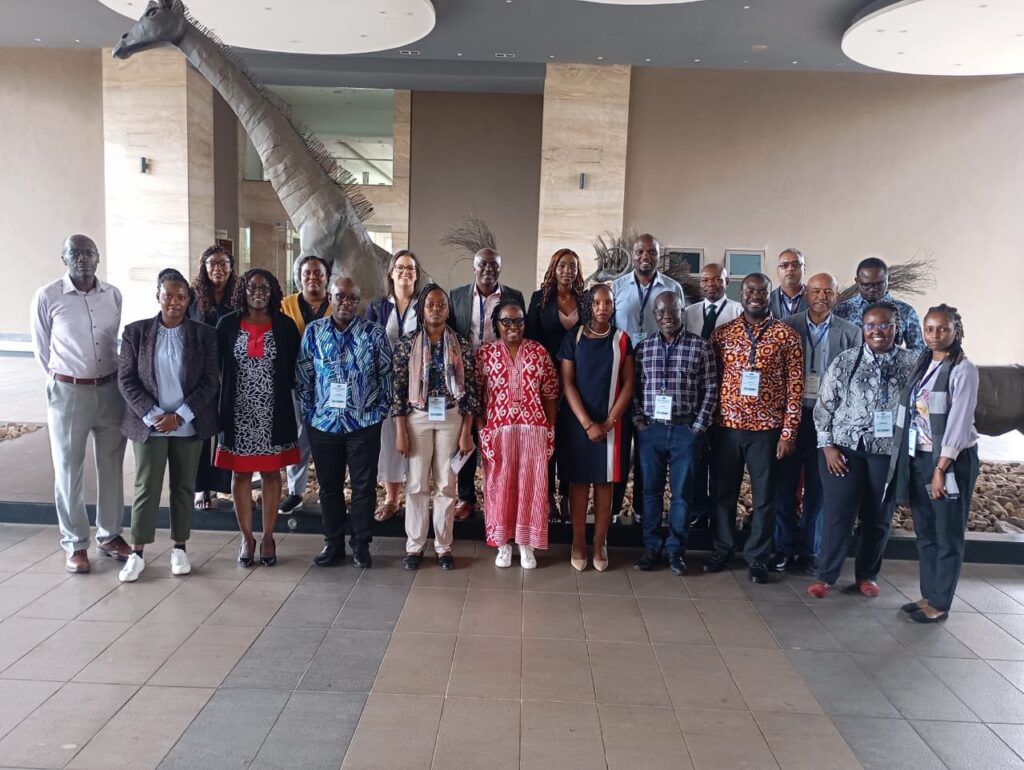 Photo: Participants stood for a group photo at Emara Olesereni during the workshop.
The Africa Research and Impact Network (ARIN), in partnership with the University of Pretoria (UP) and with support from the International Development Research Centre (IDRC), convened a two-day workshop from 28th to 29th October 2025 to co-design the Green Economy Observatory for Africa (GEO-Africa). Held at Emara Ole Sereni Hotel in Nairobi, the workshop brought together leading African scholars, policy experts and institutional partners to shape a continental framework that will generate, harmonize and apply green economy indicators tailored to African realities.
The opening session featured welcome remarks from representatives of UP, ARIN and IDRC’s Regional Director for Eastern and Southern Africa. Speakers underscored the urgency of strengthening Africa’s capacity to track, measure and steer inclusive green growth in light of persistent challenges such as unemployment, inequality and environmental degradation. They emphasized GEO-Africa’s potential to provide a decision support platform that enhances evidence-based planning, improves data systems and facilitates cross-country learning.
An overview of the workshop objectives was delivered by UP and ARIN representatives, outlining the ambition to refine the Observatory’s concept, co-design its governance structure, identify thematic pillars, and draft a multi-year proposal aligned with Agenda 2063, NDCs, and the SDGs.
Day one focused on defining the GEO-Africa vision and developing the foundation for an Africa-relevant indicator system. Participants engaged in plenary and breakout discussions to agree on the Observatory’s long-term purpose, thematic pillars, and cross-cutting dimensions. A technical session on global and African indicator models, drawing from OECD, UNEP, GGGI, and AU frameworks provided a basis for co-creating a preliminary indicator set suited to African contexts. The day concluded with mapping exercises linking proposed indicators to Agenda 2063, Nationally Determined Contributions (NDCs), SDGs and relevant policy processes to ensure the Observatory’s outputs are actionable and embedded in government decision cycles.
Day two shifted to operational design and road-mapping. Participants deliberated on governance structures, roles of institutions, quality assurance mechanisms and production timelines for Observatory outputs. A dedicated session on data architecture explored the integration of diverse data sources, interoperability requirements and principles for data sharing across countries and institutions. Afternoon sessions addressed capacity building and partnerships, identifying technical skills required to sustain GEO-Africa, potential training partners and funding opportunities. The final session synthesized draft workshop outputs, assigned follow-up responsibilities, and outlined timelines for finalizing the comprehensive GEO-Africa proposal.
The workshop concluded with reflections from participants, who reaffirmed their commitment to advancing the Observatory as a continental mechanism for strengthening inclusive green growth across Africa. A coordination and communication plan was agreed upon to guide the next phase of proposal development and stakeholder engagement.
Once operationalised, GEO Africa will support African governments, researchers, investors and civil society by providing robust indicators, cross country learning platforms and integrated evidence systems that make green economy transitions more measurable, inclusive, and actionable.
© ARIN PRESS, 2025