Authors: Humphrey Agevi, Tim Möschl, Ann Irungu, Florence Onyango, Joanes Atela, and Idil Boran
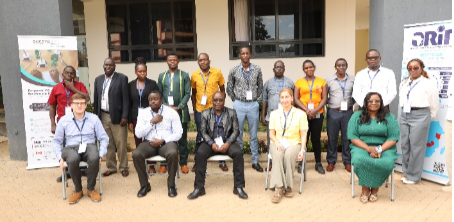
A cross-section of participants at the BioCAM4 Kakamega Workshop
The Africa Research and Impact Network (ARIN), in collaboration with the German Institute of Development and Sustainability (IDOS) and York University, successfully convened the BioCAM4 Kakamega Workshop: Stakeholder scoping and deep dive study preparation from 8–10 December 2025. The workshop served as a critical preparatory step for the BioCAM4 project, Biodiversity Integration in Climate Adaptation and Mitigation Actions for Planet, People, and Human Health, ahead of field deployment.
The Lake Region Economic Bloc (LREB) is a strategic focal point for this work, home to some of Kenya’s most ecologically significant areas, including the Kakamega Forest, which stands as the region’s only tropical rainforest remnant. This landscape perfectly exemplifies the profound interlinked crises of climate change and biodiversity loss and the corresponding threat to food security, water availability, and human health. Against this backdrop, the workshop sought to deepen regional insights into both existing and emerging Nature-Based Climate Actions (NBCAs) and co-develop strategies that align ecological, social, and policy objectives.
Workshop Focus and Methodology
The primary aim of the convening was to operationalise Work Package 2 (WP2) of BioCAM4 by establishing a shared and actionable understanding of NBCAs, which integrate Nature-based Solutions with collaborative climate actions. Participants included BioCAM4 principal investigators and country co-leads, representatives from national government agencies, county governments, the LREB secretariat, academia, and crucial local and Indigenous community organisations.
Through a combination of structured discussions, peer-learning sessions, and field-based exercises, participants examined the practicalities of implementing NBCAs within the socio-ecological realities of the LREB. The workshop heavily emphasised co-developing participatory methodologies grounded in local ownership, gender responsiveness, inclusivity, and ethical research practice, in line with the project’s Equity, Diversity, and Inclusion (EDI) framework. By grounding scientific approaches in lived realities, the workshop laid the foundation for identifying and analysing potential case study ecosystems and communities within the region, which will ultimately define where the project can generate the greatest scientific, ecological, and community impact. The goal was to move towards a regional NBCA evidence compendium documenting existing and emerging initiatives in the LREB.
Insights from Stakeholder Engagement and Outputs
Structured discussions focused on framing BioCAM4, understanding NBCAs in global and African contexts, and mapping policy and institutional governance within the LREB. A core task was the Group Exercise dedicated to identifying and analysing NBCAs in the LREB region. This process helped generate several concrete outputs, including a validated stakeholder coordination map and engagement matrix outlining roles and responsibilities, and an NBCA evidence compendium documenting existing and emerging initiatives, complete with lessons learned and key actors. This collective knowledge anchored the African component of BioCAM4. The discussions affirmed that effective NBCAs are not inherently risk-free, noting that poorly designed actions can harm both nature and people, and the pressure for quick results can overshadow considerations of equity, inclusion, and rights.
Field Engagement at Kakamega Forest
The three-day program culminated in a site familiarisation and reflection on Day 3, including a Guided Ecosystem Walk and Stakeholder Interactions at the Kakamega Forest. This field visit provided an opportunity to observe firsthand the ecological and socio-cultural significance of the landscape and to contextualise the methodological approaches being developed. Interactions with Community Forest Associations highlighted the vital role of communities in the conservation of Kakamega Forest Ecosystems. Following the visit, a Reflection Session focused on linking field insights to the NBCA Framework. These on-the-ground insights will inform a site-based case study action plan and field-learning synthesis report detailing next steps for deep-dive activities.
The BioCAM4 Approach and Implications
The workshop demonstrated that meaningful change requires elevating local voices so they can define the real challenges and solutions themselves. The BioCAM4 consortium is rooted in fostering North-South and South–South partnerships to advance co-creation beyond disciplinary silos and integrate participatory approaches into evidence-based pathways for global challenges.
The convening affirmed that effective climate–biodiversity–health interventions require integrating local knowledge, scientific evidence, and policy engagement. By promoting this co-production, the BioCAM4 project aims to generate actionable indicators and practical solutions that strengthen multi-actor climate–biodiversity–health governance in the region. The workshop marks a pivotal moment, strengthening project ownership in East Africa and laying the foundation for the next steps for the project’s deep dives, ensuring that the best ideas come from people, in real places, in real time
About ARIN
The Africa Research & Impact Network (ARIN) is an Africa-based organisation that bridges research, policy, and practice to address complex climate and environmental challenges across the continent. Through evidence-based policy briefs, knowledge products, and stakeholder engagement, ARIN supports climate adaptation, ecosystem restoration, and community resilience initiatives that integrate scientific rigour with local realities. Learn more at www.arin-africa.org.