Florence Onyango & Humphrey Agevi
Africa stands at a pivotal crossroads. On one side, climate change is intensifying at an alarming pace, reshaping coastlines, drying up rivers, and disrupting the agricultural systems on which hundreds of millions of people depend. On the other hand, a powerful and rapidly advancing technology — artificial intelligence, holds the potential to turn the tide. But potential, alone, is not enough. The real question facing the continent is not whether AI can help build climate resilience. It is whether Africa has the human talent, the institutional frameworks, and the research capacity to harness that potential on its own terms. A comprehensive assessment conducted by the Africa Research & Impact Network (ARIN) revealed that the answer is a resounding no. That is precisely what the new AI Academy, anchored at the University of Nairobi and supported by the International Development Research Centre (IDRC), has been designed to change.
The Stakes: A Continent Under Pressure
The numbers tell a sobering story. Over 60 per cent of Africa’s population lives in climate-sensitive sectors, agriculture, water, and forestry, where the consequences of a single bad season can cascade into food insecurity, displacement, and economic collapse. In 2022 alone, more than 110 million people across the continent were directly affected by weather, climate and water-related hazards, causing over US$8.5 billion in economic damage and at least 5,000 fatalities. Agricultural productivity growth on the continent has fallen by 34 per cent since 1961, more than in any other region on Earth.
These are not abstract projections. They are the lived experience of smallholder farmers watching their harvests shrink, of coastal communities bracing for storms, and of policymakers scrambling to design adaptation strategies with inadequate data and insufficient expertise. With African countries now preparing to submit their third-generation Nationally Determined Contributions(NDCs 3.0) under the Paris Agreement, the pressure to translate ambition into action has never been more acute. These updated climate pledges are expected to be more ambitious than ever, setting economy-wide emission reduction targets aligned with limiting warming to 1.5°C. However, without the technical capacity to design, monitor and implement AI-enhanced climate strategies, even the boldest NDC risks remaining aspirational rather than actionable.
Why Artificial Intelligence is a Game-Changer
Across the continent, early signs of AI’s transformative potential are already visible. In Kenya, an AI-powered spatial system called PeMOST uses satellite imagery and historical weather data to send real-time pest alerts directly to smallholder farmers’ smartphones, turning reactive crop management into proactive defence. In Tanzania, an AI early-warning system developed in partnership with the country’s meteorological authority can predict extreme weather events 24 hours in advance and disseminate tailored alerts via SMS to remote communities. In Cameroon, a mobile application helps farmers identify crop diseases simply by uploading a photograph, providing instant diagnoses and treatment advice, even in areas without internet connectivity.
These are glimpses of a broader revolution in how technology can support climate-smart planning, early warning, resource optimisation and the monitoring of national climate commitments. Mozambique’s president has publicly championed the country’s move to digitise its meteorological systems and interconnect regional data platforms. The World Bank’s Food System Resilience Programme is scaling AI-driven weather and planting advisory tools to benefit roughly six million farmers across West Africa. Microsoft’s AI for Good Lab has partnered with organisations in Northern Kenya to use geospatial machine learning to map irrigated and rainfed croplands, helping local authorities manage water supplies more efficiently.
The technology exists and the use cases are proven. What remains and what the Capacity Needs Assessment so clearly exposed is a critical gap between AI’s promise and Africa’s current ability to deploy it.
The Capacity Gap: What the Assessment Revealed
In 2024 and early 2025, ARIN conducted a rigorous Capacity Needs Assessment (CNA) as part of its “Leveraging AI for Climate Resilience Solutions in Africa” project. The findings painted a picture of deep and interconnected gaps spanning the technical, institutional and human-capital dimensions of AI adoption on the continent. These are the gaps that, if left unaddressed, will ensure that Africa remains a consumer, rather than a creator of AI-driven climate solutions.
| ~1%
of global AI investment |
Annual AI investments flowing into Africa amount to just US$2–3 billion, roughly one per cent of the global total, despite the continent being home to 17 per cent of the world’s population. The United States alone invests an estimated US$90–100 billion per year. |
| 86%
AI-illiterate women |
A 2024 survey across 52 African countries found that 86 per cent of women reported having no basic AI proficiency, and 60 per cent had never received any form of digital skills training. Women were 37 per cent less likely than men to have internet access. |
| <5%
with coding skills |
Less than 5 per cent of African youth have received training in coding or data analysis. Reports indicate that 98 per cent of those under 18 lack basic STEM exposure, a pipeline problem that will take years to reverse without deliberate intervention. |
The CNA identified three layers of vulnerability. First, there is a pronounced technical skills deficit: most African universities and research institutions lack the curriculum infrastructure, computing resources and faculty expertise to train the next generation of AI practitioners in climate applications. Second, institutional capacity remains fragile; governments and research bodies lack the governance structures, ethical frameworks, and data management systems needed to deploy AI responsibly and at scale. Third, and perhaps most troubling, is the gendered nature of the divide. Women, who are the frontline managers of food production and water in rural Africa, are systematically excluded from the very technologies that could most help them.
The Dissemination Webinar
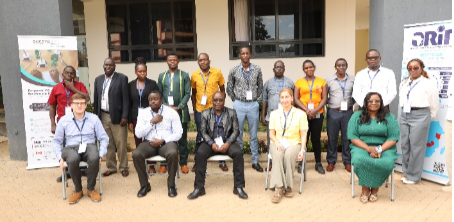
In early 2025, ARIN, together with the University of Nairobi and IDRC, hosted a landmark dissemination webinar titled “Catalysing AI-Driven Climate Resilience Through Capacity Strengthening.” The event drew approximately 286 participants from across the African continent: researchers, policymakers, AI technologists, civil society actors, development partners and private-sector innovators. It was, by any measure, a significant convening and its timing was deliberate.
Held precisely as African nations were gearing up for their NDC 3.0 submissions, the webinar proved to be a platform for something the continent rarely gets: an honest, evidence-driven conversation about where the real bottlenecks lie. Participants did not simply hear the CNA findings presented; they interrogated them, debated them and began to co-create solutions. The dialogue ranged from how to embed AI literacy into higher-education curricula across the continent to how to design ethical frameworks that are culturally grounded and gender-responsive. It also explored how national climate strategies can be restructured to make AI integration a core pillar rather than an afterthought.
What emerged from the webinar was not just a shared understanding of the problem. It was a shared sense of urgency and a collective commitment to building something transformative in response.
Introducing the AI Academy
The AI Academy is ARIN’s flagship response to the gaps the Capacity Needs Assessment uncovered. Anchored at the University of Nairobi’s Institute for Climate Change and Adaptation one of the continent’s premier centres for climate research and funded by the International Development Research Centre, the Academy is designed to do what no single training programme or fellowship has yet attempted at scale: build a critical mass of African AI-for-climate professionals who are not only technically skilled but also ethically grounded, gender-conscious, and equipped to shape policy.
Who it is For
The Academy’s initial cohort of 100 fellows is drawn from a broad cross-section of African talent: early- and mid-career researchers, policymakers, and practitioners working at the intersection of climate science and emerging technology. The fellowship runs between six and nine months and is structured as a phased journey beginning with a mandatory three-month e-learning programme delivered through the University of Nairobi, before a select group progresses to hands-on academy activities, internships, and grant-funded research projects.
What it Teaches
The curriculum is deliberately interdisciplinary. Fellows receive foundational training in AI and machine learning, contextualised around climate resilience applications from crop-yield prediction and flood modelling to carbon-stock monitoring and ecosystem management. But the Academy goes well beyond the technical. Participants engage in writing and publishing workshops, policy mentorship sessions, and collaborative research that is designed to produce not only academic outputs but also practical tools: case studies, policy briefs, and prototype AI solutions tailored to African climate contexts.
What Makes it Different
Three design principles set the AI Academy apart. First, it is built on African soil, by African institutions, for African challenges, grounding every module in local realities rather than importing curricula designed for vastly different contexts. Second, it is explicitly gender-responsive: the Academy’s structure, mentorship pathways, and research themes are designed to close the participation gap that the CNA identified as one of the most critical barriers to inclusive climate action. Third, it is embedded in a research ecosystem where fellows do not simply learn; they produce. Every participant is expected to contribute to knowledge co-creation, feeding insights back into the broader ARIN network and into national and regional climate strategies.
The Bigger Picture: Africa Owning its AI Future
The AI Academy does not exist in isolation. It is part of a broader, continent-wide reckoning with the question of who gets to shape the tools that will define the next decade of climate action. UNDP has warned that without deliberate infrastructure investment, Africa risks repeating the mistakes of the pandemic era, when the continent had almost no vaccine manufacturing capacity and paid a devastating price for that asymmetry. The same logic applies to AI. The continent holds critical minerals that power the global AI economy: cobalt, manganese, graphite, and rare earths. Paradoxically, the chips, the models, and the decision-making power remain overwhelmingly elsewhere.
The IDRC’s long track record of investing in African research capacity, from its foundational Climate Change Adaptation in Africa programme, which funded 46 projects across 33 countries, to the CLARE initiative, helped produce the most comprehensive-ever IPCC assessment of the African continent. It underscores that capacity building is not a side activity. The IDRC’s involvement in the AI Academy signals a conviction that this moment, with NDC 3.0 on the horizon, with AI maturing rapidly, and with Africa’s climate vulnerability intensifying, is the moment to invest.
From 1990 to 2019, research on Africa received just 3.8 per cent of climate-related research funding globally, and only 14.5 per cent of that went to African institutions. The AI Academy is a small but deliberate counter-weight to that imbalance, a signal that the future of climate resilience in Africa will be designed, not just in Washington or Geneva, but in Nairobi, Accra, Lagos and Dakar.
Looking Ahead
The AI Academy’s first cohort represents a beginning, not an endpoint. The fellows who emerge from this programme will carry with them not only technical competence but also a network, a community of practice stretching across borders, disciplines, and institutions. They will publish. They will advise. They will build tools. And, critically, they will train others.
The question now is not whether Africa can build the talent it needs to lead on climate resilience with AI. The question is whether the world will invest enough and quickly enough to make sure the proof becomes a revolution.