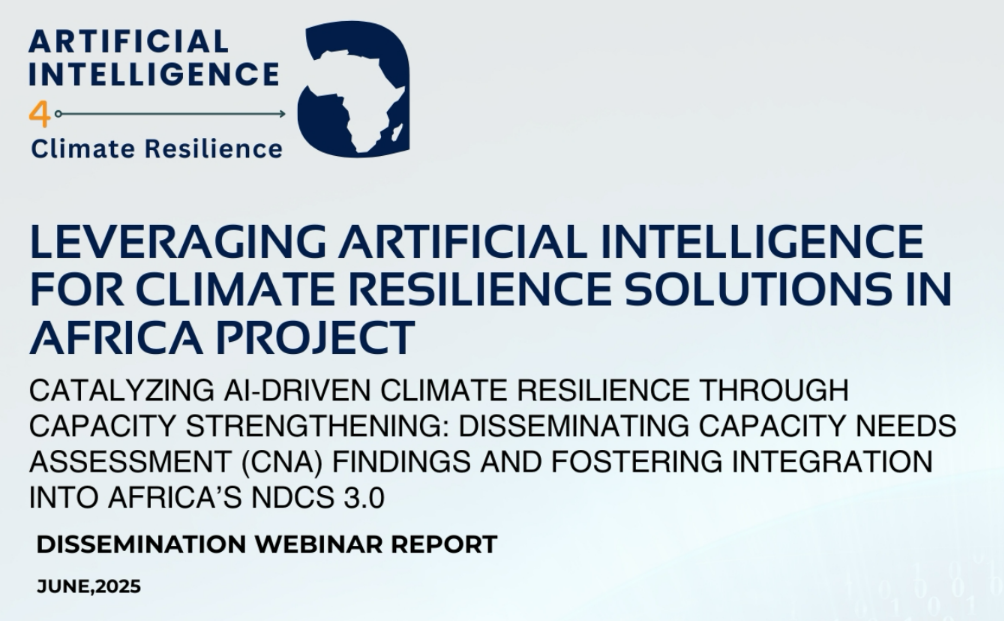
The Africa Research and Impact Network (ARIN), in collaboration with the University of Nairobi (UoN) and the International Development Research Centre (IDRC), hosted a groundbreaking dissemination webinar titled “catalyzing AI-Driven Climate Resilience Through Capacity Strengthening.” This strategic convening brought together approximately 286 participants from across the African continent, including leading researchers, policymakers, AI technologists, civil society actors, development partners, and private sector innovators, underscoring a shared commitment to building climate resilience through transformative technologies.
Held at a pivotal moment as African countries prepare to submit their third generation Nationally Determined Contributions (NDCs 3.0), the webinar served as a timely platform for reflecting on capacity gaps, sharing research evidence, and co-creating inclusive and scalable pathways toward a climate-smart future. Discussions were anchored in the findings from a comprehensive Capacity Needs Assessment (CNA) component conducted under the “Leveraging AI for Climate Resilience Solutions in Africa” project. The CNA identified key technical, institutional, and human capital gaps that currently hinder the effective adoption of Artificial Intelligence (AI) within Africa’s climate action landscape. The full CNA report is accessible (via this link).
As the continent grapples with intensifying climate risks, particularly in climate-sensitive sectors such as agriculture, water, and forestry, the potential of AI to reshape environmental governance has never been more urgent. AI technologies offer vast opportunities to revolutionize early warning systems, optimize resource use, support climate-smart planning, and improve the monitoring and evaluation of NDC implementation. However, realizing these benefits requires deliberate investments in capacity building, ethical frameworks, and policy coherence.
The webinar not only disseminated critical insights from the CNA but also launched a continent-wide dialogue on how best to integrate AI into national climate strategies in ways that are inclusive, evidence-driven, and aligned with Africa’s development priorities. Participants explored collaborative solutions to embed AI in higher education curricula, bolster institutional innovation, and ensure ethical, gender-responsive, and locally relevant AI adoption. In so doing, the event marked a foundational step in catalyzing a new generation of AI-informed climate professionals and decision-makers, setting the stage for a more resilient and technologically empowered Africa.