Leveraging Artificial Intelligence for Climate Resilience Solutions in Africa Project Workshop Held in Nairobi

By: Maria Nailantei, Florence Onyango

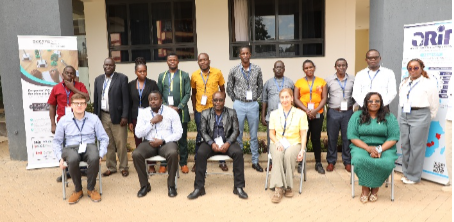
Photo: Dr. Joanes Atela explaining concepts to participants during the day 1 workshop at Olesereni

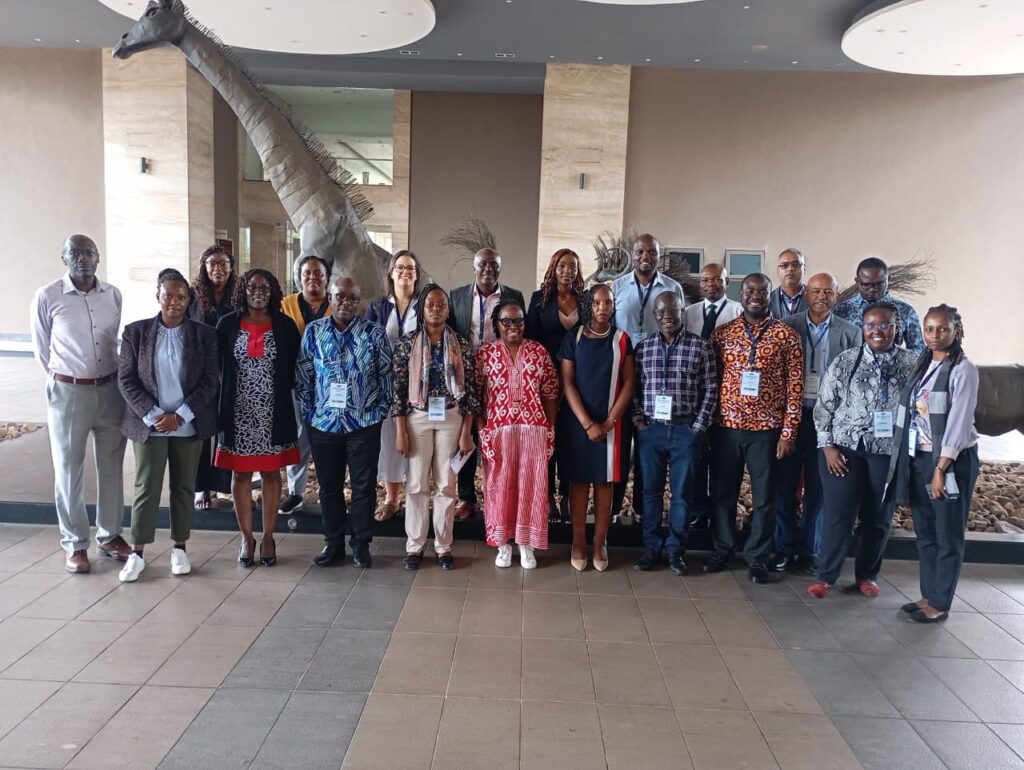
The African Research and Impact Network (ARIN) convened a two-day workshop under the “Leveraging Artificial Intelligence for Climate Resilience Solutions in Africa” project from 30th to 31st July, 2025. Hosted at Ole Sereni Hotel, the workshop brought together project leads and technical experts to co-develop inclusive and impactful training modules focused on the intersection of AI and climate resilience in Africa.

The opening remarks were delivered by Principal Investigator Dr. Joanes Atela, who welcomed participants and set the tone for the workshop by highlighting the strategic importance of leveraging Artificial Intelligence (AI) to enhance climate resilience in Africa. He emphasized the need for robust, locally grounded AI solutions that address climate risks while centering ethical, gender-sensitive, and inclusive approaches.

Dr. Humphrey Agevi provided a comprehensive overview of the project milestones, tracing the journey from its inception to the current phase. He outlined key achievements, including sensitisation webinar, inception workshop, conducting a capacity needs assessment (CNA) and a dissemination webinar for the CNA report to the wider African audience.

The first day of the workshop featured eight in-depth modules, each tackling a critical theme at the intersection of climate change and AI. The presenters of the modules presented the outline of the module and method of content delivery. These included fundamentals of climate science, Fundamentals of Artificial Intelligence (AI), approaches to integrating AI into climate policy planning, modelling climate scenarios for adaptation and tools for vulnerability mapping across sectors and geographies. Dedicated sessions also explored the ethical considerations of AI deployment, gender-responsive adaptation planning and the structuring of effective case study frameworks to ensure real-world applicability. Throughout the day, peer feedback sessions facilitated by Dr. Joanes Atela created space for dynamic dialogue and collaborative critique. These sessions enabled participants to offer insights, share contextual challenges and collectively refine the module content in real time, ensuring that the material was not only technically robust but also relevant and actionable across diverse African contexts. This was meant to ensure that the modules address the aspirations of the AI fellowship.

Day two of the workshop was dedicated to collaborative module co-creation and the finalization of the AI Fellowship selection process. Building on the insights and feedback from the first day, participants worked to refine the training modules, ensuring that the content was contextually grounded, technically sound and aligned with the project’s broader goals of strengthening climate resilience through AI-driven approaches. This co-creation process emphasized cross-disciplinary integration, local relevance and usability across different African contexts.

A key highlight of the day was the presentation by Dr. Eurallyah Akinyi, the ARIN fellowship manager, who outlined the shortlisting criteria and assessment rubrics for the AI Fellowship program. Her presentation detailed the parameters used to evaluate applications, including thematic alignment with the project, demonstration of innovation potential, relevance to local climate challenges and the applicant’s capacity for collaboration and impact. Following this, participants engaged in interactive sessions to review the selection criteria and validate it. These reviews involved critical discussions on applicant strengths, geographic and gender representation, and potential for contributing to and benefiting from the fellowship program. The day concluded with final deliberations, during which consensus was reached on the selection of fellows, ensuring a transparent, inclusive, and merit-based process.

The workshop provided a strong foundation for developing a regional cadre of AI fellows equipped to design and implement AI-driven climate resilience solutions tailored to African realities.

© ARIN PRESS, 2025